Here’s how to make sure Hawaii’s missile warning fiasco isn’t repeated

This is a guest post from Steve Bellovin, a professor in the Computer Science department and affiliate faculty at the law school at Columbia University. His research focuses on networks, security, and public policy. His opinions don’t necessarily reflect the views of Ars Technica.
(credit: EUGENE TANNER/AFP/Getty Images)

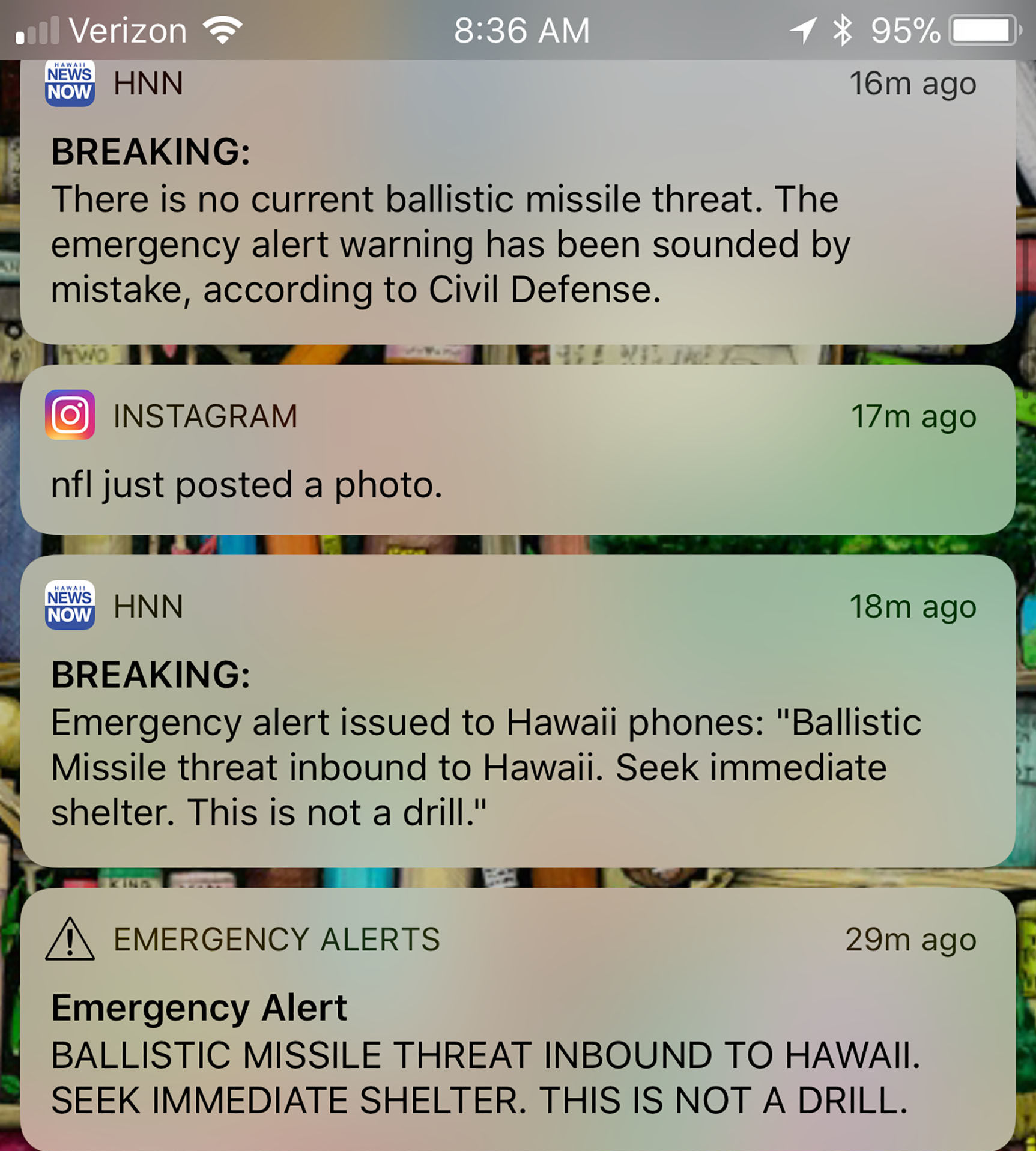
By now, most people have heard about the erroneous incoming ICBM alert in Hawaii. There’s been scrutiny of the how the emergency alert system works and of how international tensions and the flight times of missiles can lead to accidental nuclear war. I’d like to focus instead on how the systems design in Hawaii led to this problem—a design that I suspect is replicated in many other states.

One possible factor, of course, is hurried design:

Read 11 remaining paragraphs | Comments

Post Author: martin

Martin is an enthusiastic programmer, a webdeveloper and a young entrepreneur. He is intereted into computers for a long time. In the age of 10 he has programmed his first website and since then he has been working on web technologies until now. He is the Founder and Editor-in-Chief of BriefNews.eu and PCHealthBoost.info Online Magazines. His colleagues appreciate him as a passionate workhorse, a fan of new technologies, an eternal optimist and a dreamer, but especially the soul of the team for whom he can do anything in the world.

Leave a Reply

Your email address will not be published. Required fields are marked *

This site uses Akismet to reduce spam. Learn how your comment data is processed.