
Fraunhofer IWES | Energy system technology
Pumped storage is a decades-old technology with a relatively simple concept: When electricity is cheap and plentiful, use it to pump water up into a reservoir above a turbine, and when electricity is scarce and expensive, send that pumped water down through a turbine to generate more power. Often, these pumped storage facilities are auxiliary to other electricity-generating systems, and they serve to smooth out fluctuations in the amount of power on the grid.
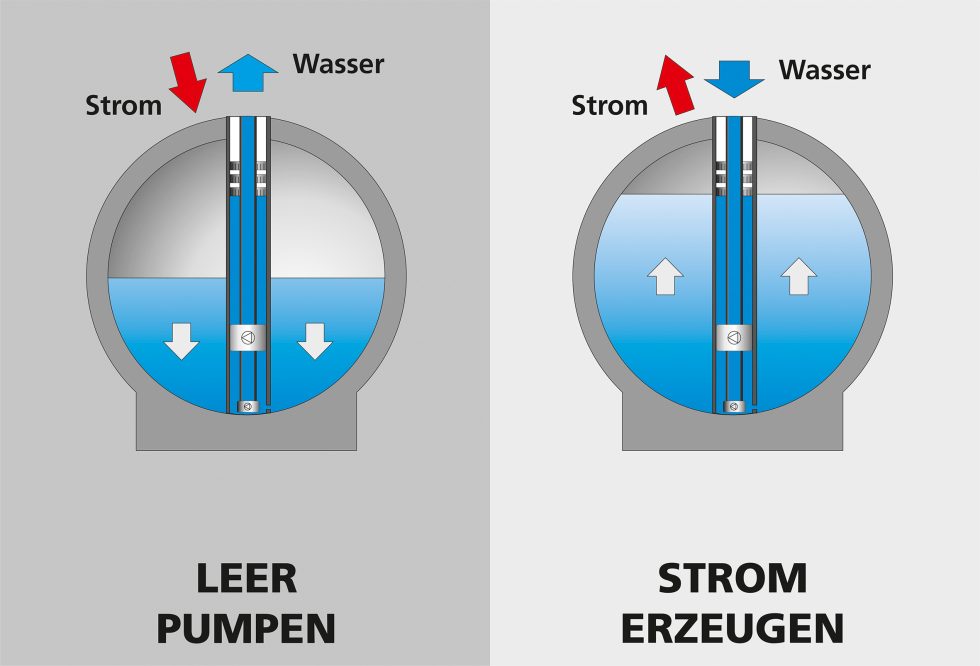
A German research institute has spent years trying to tailor pumped storage to ocean environments. Recently, the institute completed a successful four-week pilot test using a hollow concrete sphere that it placed on the bottom of Lake Constance, a body of water at the foot of the Alps. The sphere has a diameter of three meters and contains a pump and a turbine. Much like traditional pumped storage, when electricity is cheap, water can be pumped out of the sphere, and when it’s scarce, water can be let into the sphere to move the turbine and generate electricity.
Read 4 remaining paragraphs | Comments


