
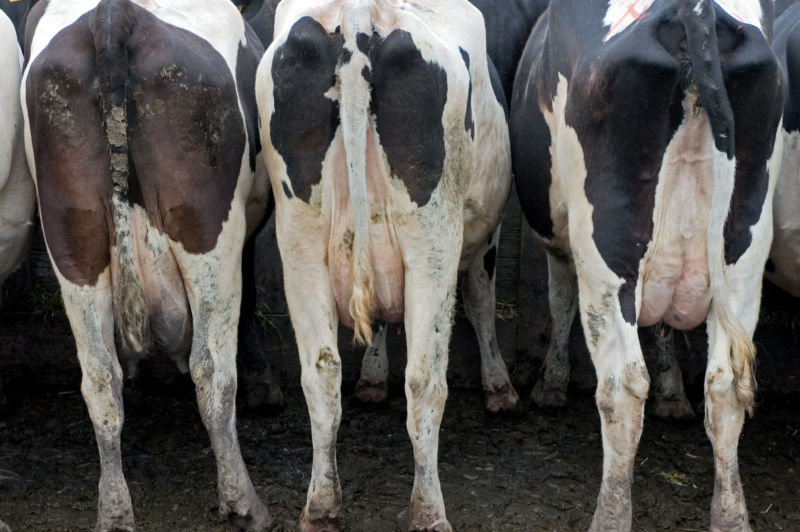
Enlarge / Cows. (credit: Getty | jskiba)
Think livestock poop loaded with antibiotics and antibiotic-resistant microbes is already terrifying? According to a new study, doped-up droppings aren’t just biohazards festering on farms across the country. They also contribute to climate change.
Soil microbial communities stressed by farm-borne superbugs and drugs can burn through up to 5.8 times the amount of soil carbon stores as their undisturbed counterparts. This is according to a new report in Proceedings of the Royal Society B. Though the study didn’t plunge into the exact cause of the revved-up carbon cycling, the researchers speculate that the heavy use of antibiotics on farms leads to soil microbes getting locked into molecular arms-races and wars—both of which are metabolically costly endeavors.
The findings are troubling given that global livestock production is on the rise. In lockstep, use of antibiotics is expected to leap 67 percent over the next two decades. Already, almost 80 percent of antibiotics sold in the US go to farms, and farm animals excrete anywhere from 40 to 95 percent of the drugs they ingest—alongside a steady stream of drug-resistant germs.
Read 10 remaining paragraphs | Comments


